

Published in 2022~2023(Vol.24-25) of Journal of Material Cycles and Waste Management (JMCWM)
We are pleased to announce the selected 4 papers for the award among about 500 Original Articles and Review Articles published in JMCWM during 2022-2023. The award is given to outstanding papers to acknowledge their scientific contribution to JMCWM. Congratulations to all the awardees.
Editors of JMCWM
Awarded Papers 2024
The following publication by the winners are free to read via SharedIt links.

A sustainable production model for waste management with uncertain scrap and recycled material
- First Author
- Anand Chauhan
- Co-authors
- Nagendra Kumar Sharma, Shilpy Tayal, Vimal Kumar, Manish Kumar
- Affiliation
- Graphic Era Deemed to be University, India
- Publication Details
- Volume 24, Issue 5, Pages 1797–1817 (2022)
- Academic Metrics
- 977 downloads, 23 citations (As of November 2024)
Abstract
The studies highlightthat only one billion tons were obtained out of four billion tons of solid waste in the world and small value recovered out of it. In such a way, indeed, there is still a wide scope in collecting and converting the waste into value. In the industrial set-up because for various reasons, the production process is not optimum towards the conversion of resources into value. Hence, some defective items are also produced during production, which is a kind of waste for a firm. The firm manages such wastes by selling them into the secondary market at lower prices. To deal with the waste, firm also collects the used products from the customer under the circular economy concept. Later, these used collected products were recycled and used raw material for further production. The way to collect the used product from the market and to use them again as raw material is a remarkable effort to reduce waste. The objective of the research is to optimize the unit time profit and the expected resultant costs by considering the concept of recycling waste in the fuzzy environment for the imperfect production process. The sustainable production model is developed with the system cost with the fuzzy approach and validated the model with an illustration. The unit time profit has been maximized with the help of an analytical approach. A sensitivity analysis is also performed to check the stability of the model and the model is found to be quite stable. The evaluation of the fuzzy system cost may provide the decision maker’s information regarding the system’s behavior uncertainties.
-
Main Reason for the Award
This study makes an important contribution to advancing sustainable production and circular-economy practices through rigorous mathematical modeling. The authors develop a novel sustainable supply-chain inventory model that integrates imperfect production, uncertain scrap generation, defective items, and the reuse of collected products as recycled raw material, all within a fuzzy environment that realistically reflects industrial uncertainty. By applying pentagonal fuzzy numbers, graded mean integration, and optimization techniques, the study provides a robust analytical framework for maximizing unit-time profit while reducing waste.
The paper’s originality lies in its simultaneous treatment of uncertain demand, scrap variability, and remanufacturing decisions, which previous research has not addressed in an integrated manner. The empirical verification using data from a corrugated-cardboard factory and the comprehensive sensitivity analysis further demonstrate the model’s practical value and managerial relevance. Results clearly show that using recycled materials as inputs yields substantially higher profitability than relying solely on virgin materials, offering strong evidence for industry adoption of circular waste-collection and recycling systems.
Through methodological rigor and practical insight, this paper provides a significant step toward waste-minimizing, economically viable production systems, making it a deserving recipient of the award.
-
Award Recipient’s Resume
- 2010: Ph. D.(Mathematics) (2010) : Ch. Charan Singh University, Meerut, India
- 5-Aug 2024-present: Professor, Department of Mathematics, Graphic Era Deemed to be University, Dehradun, India
-
Primary Research Area
- Mathematical Modelling and Optimization
- Fuzzy Optimization
- Operational Research
- Industrial Engineering
- Sustainable Production and Waste Management
-
Selected Publications
- Rani A, Singh SK , Goel A, Chauhan A (2025) Sustainable food waste-to-bioenergy supply chain with rate of return under triple bottom line approach. Applied Energy 399:126454.
- Sarkar B, Singh SK, Chauhan A (2025) An advanced robust possibilistic chance-constrained programming model for the animal fat-based biodiesel supply chain network. Journal of Industrial Information Integration 47:100884.
- Singh SK, Chauhan A, Sarkar B (2024) Strategy planning for sustainable biodiesel supply chain produced from waste animal fat. Sustainable Production and Consumption 44:263-281.
- Singh SK, Chauhan A, Sarkar B (2024) Resilience of sustainability for a smart production system to produce biodiesel from waste animal fat. J. Clean Prod . 452:142047.

Eco-friendly CaO-based catalysts derived from waste oyster shells for the oxidative coupling of methane
- First Author
- JeongHyun Cho
- Co-authors
- Sangwon Kim, Kyung Tae Park, Chang Houn Rhee, Hai Woong Park, Ji Chul Jung
- Affiliation
- Myongji University, Republic of Korea
- Publication Details
- Volume 25, Issue 6, Pages 3355–3366 (2023)
- Academic Metrics
- 224 downloads, 1 citation (As of November 2024)
Abstract
In this study, we developed an economical and eco-friendly high-performance catalyst for the oxidative coupling of methane from waste oyster shells, which cause environmental pollution. The oyster shells were successfully transformed into CaO-based catalysts by the calcining at different temperatures. During calcination process, foreign elements (Na, Mg, and Al) naturally present in waste oyster shells caused the generation of oxygen vacancies and changes in the surface chemical properties (base sites and surface oxygen species) of the catalysts. When the catalysts were used in oxidative methane coupling, the oxygen vacancies on the catalyst surface played a crucial role in the conversion of methane to methyl radicals, which are expected to dimerize to ethane. However, the moderately basic sites and electrophilic lattice oxygen species facilitated the production of ethylene through the dehydrogenation of ethane. Therefore, the sample calcined at 800 °C not only exhibited an outstanding catalytic activity in the oxidative coupling of methane but also high long-term stability because of its abundant active sites: oxygen vacancies, moderately basic sites, and electrophilic lattice oxygen species. The study demonstrates that waste oyster shells can be successfully recycled into a high value-added product, such as a catalyst applicable in the oxidative coupling of methane.
-
Main Reason for the Award
This paper is awarded for its innovative contribution to sustainable catalysis and resource recycling by developing high-performance CaO-based catalysts derived from waste oyster shells. The study addresses two major global challenges—marine waste management and efficient methane utilization—by successfully converting oyster shell waste into an eco-friendly and economically viable catalyst for the oxidative coupling of methane (OCM).
Through comprehensive characterization (ICP-AES, XRD, CO2-TPD, O2-TPD, XPS), the authors reveal that naturally occurring impurities in oyster shells (Na, Mg, Al) induce abundant oxygen vacancies, moderately basic sites, and electrophilic lattice oxygen, which together enhance methane activation and ethylene production. Notably, the catalyst calcined at 800 °C (OS800) demonstrates exceptional CH4 conversion, high C2H4 selectivity, and remarkable long-term stability over 50 h—performance metrics comparable to or surpassing those of conventional CaO catalysts.
The work offers important mechanistic insights into how surface chemistry governs OCM pathways, clarifying the roles of oxygen vacancies, basicity, and lattice oxygen species in C2 hydrocarbon formation. By transforming a problematic waste material into a high-value catalytic system, this study presents a compelling model of circular-economy innovation. Its scientific rigor, environmental significance, and practical relevance make it highly deserving of this award.
-
Award Recipient’s Resume
- 2021: B.S. in Chemical Engineering, Myongji University, Republic of Korea
- 2023: M.S. in Chemical Engineering, Myongji University, Republic of Korea
- 2023-present: Ph.D. student in Advanced Catalysis Engineering Laboratory, Department of Chemical Engineering, Myongji University, Republic of Korea
-
Primary Research Area
- Catalysts for combustible gases oxidation
- Metal oxide catalysts, including single oxides and perovskite oxides
-
Selected Publications
- Cho J, Kim S, Park KT, Rhee CH, Park HW Jung JC (2023) Eco-friendly CaO-based catalysts derived from waste oyster shells for the oxidative coupling of methane. Journal of Material Cycles and Waste Management 25(6):3355-3366.
- Cho J, Kim M, Park KT, Rhee CH, Park HW, Koo B, Jung JC (2023) Surface engineering to tailor the active sites of SrTi0.9Co0.1O3-δ perovskite for CO oxidation. Molecular Catalysis 550:113536.
- Cho J, Kim M, Yang I, Park KT, Rhee CH, Park HW, Jung JC (2024) Oxygen vacancy engineering for tuning the catalytic activity of LaCoO3 perovskite. Journal of Rare Earths 42(3):506-514.
- Cho J, Yun J, Kim M, Park KT, Park HW, Jung JC (2025) Surface engineering of perovskite catalysts: Using acid treatment to enhance CO and CH4 oxidation activity. Applied Catalysis A: General 701:120312.
- Cho J, Kim M, Jung JC (2025) A Review on Surface Oxygen Species in Perovskite Oxide Catalysts for Oxidation Reactions: Toward Rational Catalyst Design. Journal of Environmental Chemical Engineering 13:119349.
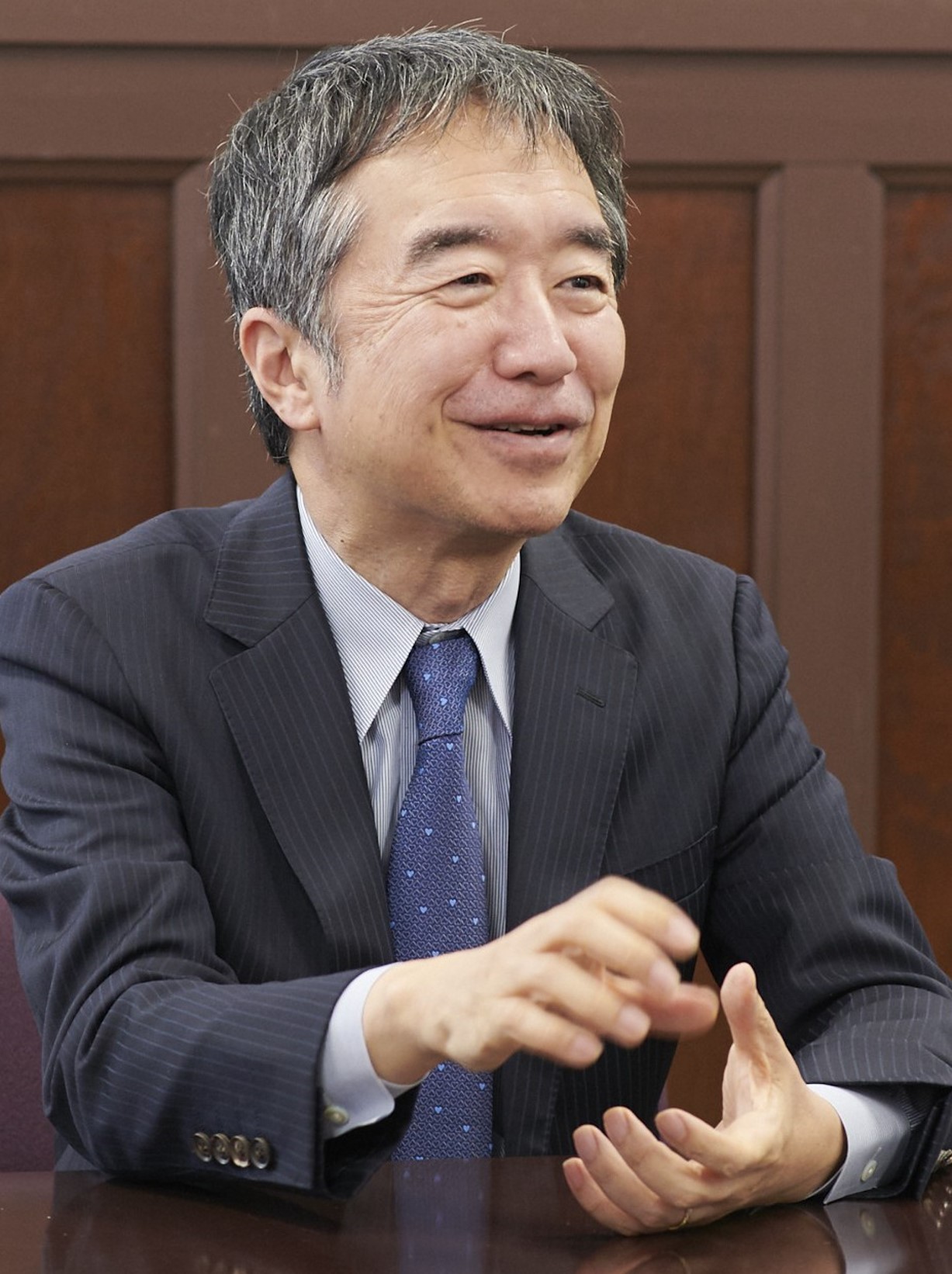
How material flow cost accounting contributes to the SDGs through improving management decision-making
- First Author
- Katsuhiko Kokubu
- Co-authors
- Hirotsugu Kitada, Kimitaka Nishitani, Aki Shinohara
- Affiliation
- Kobe University, Japan
- Publication Details
- Volume 25, Issue 5, Pages 2783–2793 (2023)
- Academic Metrics
- 3,252 Downloads, 7 citations (As of November 2024)
Abstract
The purpose of this study is to clarify how material flow cost accounting (MFCA) can contribute to the SDGs and indicate how to introduce it into a company. First, we undertake a literature review to examine which SDGs MFCA can potentially contribute to. We then analyse the interplay between MFCA and management decision-making on the SDGs using an MFCA-LCA integrated model. Finally, we discuss how to introduce MFCA into a company to integrate the SDGs into management decision-making with reference to the SDG Compass. The main contributions are as follows: First, we revealed that MFCA could potentially contribute to multiple goals in the SDGs. Second, we clarified that MFCA could integrate the SDGs into actual management decision-making. Third, we suggested appropriate steps for implementation, regarding how managers should introduce MFCA into the management process on the condition that it does not prioritise economic benefit over social and environmental benefits in contributing to the SDGs. Therefore, this study provides evidence that MFCA can contribute to the SDGs by integrating them into management decision-making, and suggests appropriate implementation steps for promoting the pursuance of SDGs in any company.
-
Main Reason for the Award
This paper is awarded for its significant contribution to advancing the integration of sustainability into corporate management through a comprehensive and insightful analysis of Material Flow Cost Accounting (MFCA) and its relevance to the Sustainable Development Goals (SDGs). By conducting a thorough literature review, the authors clearly demonstrate that MFCA can contribute to multiple SDGs, including resource efficiency, waste reduction, water and energy management, and climate action.
A major contribution of the study is its development and application of an MFCA–LCA integrated framework, which illustrates how combining cost-based and environmental indicators can enhance management decision-making. The paper convincingly shows that identifying and reducing material losses not only improves environmental performance but also delivers economic benefits—an essential insight for promoting corporate engagement with the SDGs.
Furthermore, the authors provide practical guidance on how MFCA should be positioned within the five steps of the SDG Compass, emphasizing its appropriate use in the integration phase to support economic evaluation without undermining sustainability priorities.
Overall, this article offers theoretical advancement, methodological clarity, and actionable implications, making it a highly deserving recipient of this award.
-
Award Recipient’s Resume
- 1993: Doctor of Business Administration, Osaka City University
- 2001-Present: Professor, Graduate School of Business Administration, Kobe University
-
Primary Research Area
- Social and Environmental Accounting
- Environmental Management Accounting
-
Selected Publications
- Kokubu K, Nishitani K, Kitada H, Ando M (2022) Emergent responsible management: A social connection model. Springer, doi: 10.1007/978-981-19-0416-5.
- Kokubu K, Nagasaka Y (2020) Sustainability management and business strategy in Asia. World Science Publishing Co.
- Nishitani N, Nguyen TBH, Kokubu K (2024) Does the economic motivation of firms to address the United Nations’ Sustainable Development Goals (SDGs) promote the SDGs or merely SDG-washing? Critical empirical evidence from Japan and Vietnam. Review of Managerial Science 19:415465.
- Nishitani K, Kokubu K, Wu Q, Guether E, Guether T (2021) Material flow cost accounting (MFCA) for the circular economy: An empirical study of the triadic relationship. Journal of Environmental Management 303:114219.
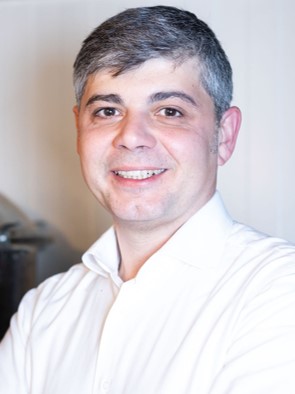
Study on the degradability of plastics with prodegradant additives during anaerobic and aerobic biological waste treatment processes
- First Author
- Christian Zafiu
- Co-authors
- Erwin Binner, Lukas Höck, Kacper Świechowski, Marion Huber-Humer
- Affiliation
- BOKU University, Austria
- Publication Details
- Volume 25, Issue 6, Pages 3545–3556 (2023)
- Academic Metrics
- 1811 downloads, 1 citation (As of November 2024)
Abstract
The degradability of conventional plastic packaging specimens made from PP and PET, that were produced with novel prodegradant additives, was investigated during biological waste treatment processes. The additives were merchandised to foster the degradation of commodity plastics by enzymatic or by abiotic processes. Four different plastic packaging specimens and two different additives were evaluated for their biodegradability during anaerobic and aerobic waste treatment conditions. Aerobic treatment was investigated in laboratory rotting tests, simulating conditions during composting in a plant according to the Austrian state-of-the-art, while anaerobic treatment was investigated in laboratory digestion reactors. The study shows that only the PET specimens showed a loss of mass of ca. 6.5%, during 50 days of digestion at 52 °C. None of the specimens degraded during the aerobic rotting process. None of the materials fragmented into microplastic particles of sizes > 1 mm under the investigated conditions. However, FTIR analysis revealed the oxidation in the case of PP specimens, which indicated a mediated oxidation process during composting, independent of the merchandised mechanism of predegradation. Under anaerobic conditions, the plastic specimens containing reactors produced more biogas within the first 20 days of digestion, that did not originate from an observable degradation of the plastics.
-
Main Reason for the Award
This paper provides an important and timely scientific contribution by rigorously evaluating the degradability of conventional plastics containing newly marketed prodegradant and enzyme-based additives under realistic biological waste-treatment conditions. Using well-designed laboratory composting and anaerobic digestion trials that simulate state-of-the-art Austrian treatment practices, the study establishes a rare evidence base on whether such additives meaningfully enhance biodegradation.
Through detailed mass-balance monitoring, gas-generation analysis, and molecular-level ATR-FTIR characterization, the authors demonstrate that PP specimens showed no measurable degradation, while PET exhibited only minor mass loss (~6.5%) under anaerobic conditions. Importantly, no microplastic fragments (>1 mm) were detected, but clear oxidative transformations in PP (appearance of C–O bands) indicate that additives can induce chemical modification without achieving full biodegradation. The study also reveals that certain additives can stimulate biogas formation in low-activity digestates—an unexpected result with significant implications for methane emissions if such plastics enter landfills or anaerobic environments.
By combining methodological rigor with environmentally relevant insights, this paper provides essential evidence for policymakers, waste-management operators, and industry regarding the true behavior and risks of prodegradant-containing plastics. Its scientific depth and societal relevance make it highly deserving of this award.
-
Award Recipient’s Resume
- 2011: PhD in Chemistry (Physical Chemistry), University of Vienna
- 2022-present: Assistant Professor (Assistenzprofessor), Institute of Waste Management and Circularity, University of Natural Resources and Life Sciences, Vienna (BOKU)
-
Primary Research Area
- Waste analysis & Environmental forensics
- Emerging pollutants
- Microplastic emissions from waste management
- Value and pollutant flow analysis in waste treatment
- Analytical method development
-
Selected Publications
- Zafiu C, Binner E, Beigl P, Vay B, Ebmer J, Huber-Humer M (2023) The dynamics of macro- and microplastic quantity and size changes during the composting process. Waste Manag . 162:154–164.
- Binner E, Zafiu C, Beigl P, Vay B, Huber-Humer M (2025) Investigation on the formation of microplastics from compostable plastic bags during the rotting process in field tests.J. Mater. Cycles Waste Manag . 27:4301–4311.
- Li W, Brunetti G, Zafiu C, Kunaschk M, Debreczeby M, Stumpp C (2024) Experimental and simulated microplastics transport in saturated natural sediments: Impact of grain size and particle size. J. Hazard. Mater . 468:133772.
- Hailu M, Fetahi T, Mengistou S, Vay B, Zafiu C (2025) Sediments microplastics along three Ethiopian Rift Valley lakes demonstrated variation in polymer composition and moderate contamination level. Environmental Pollution 384:126924
- Surendran D, Varghese G, Zafiu C (2024) Characterization and source apportionment of microplastics in Indian composts. Environmental Monitoring and Assessment 196(1):5.
